What was East Africa like 4 million years ago, what did the inhabitants eat, how did they live? Surprising information found in tooth fossils

Published: 01:44 23 April 2026
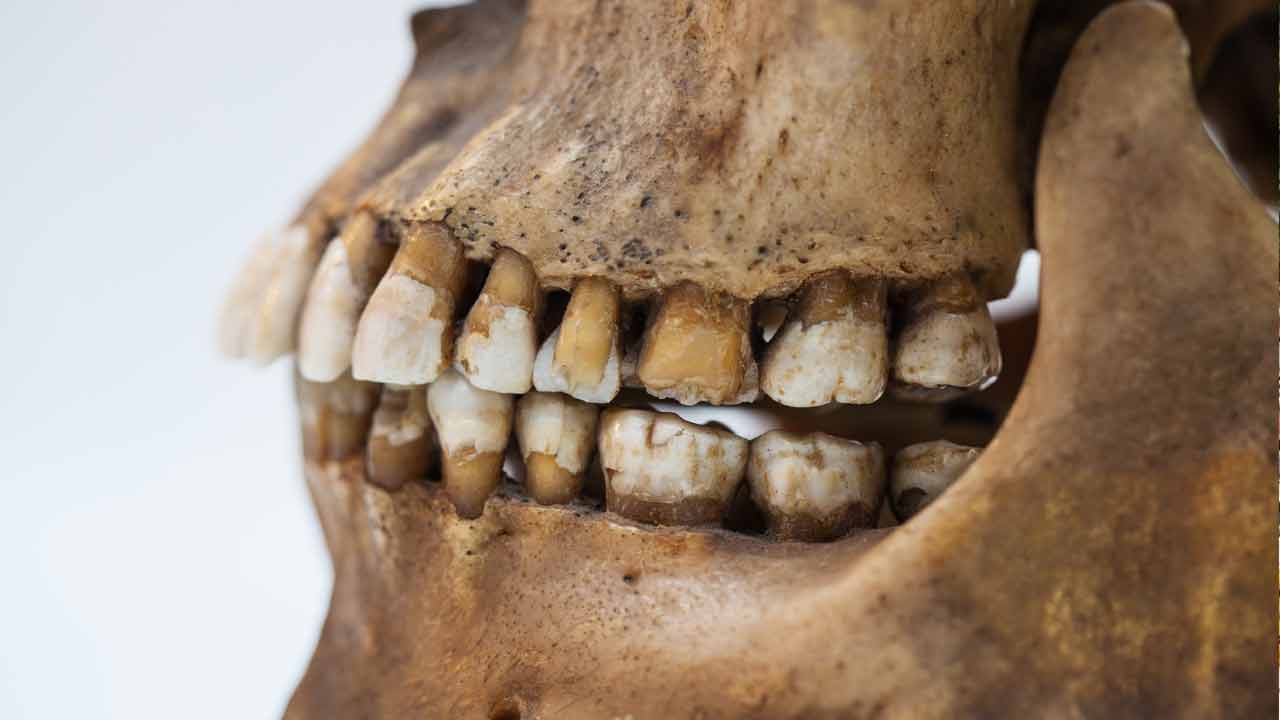
The Afar region of East Africa was not as dry as it is today, but rather full of dense forests, rivers and lakes - such sensational information has emerged from the analysis of ancient tooth fossils. Scientists say that important evidence of the environment, fauna and lifestyle of primitive people millions of years ago is hidden in tooth enamel.
The study was led by Professor Zelalem Bedaso of the University of Dayton in the United States. After examining the tooth fossils recovered from the Afar region of Ethiopia, they found that this region was completely different about 4 million years ago.
Scientists explained that even though human bones decay over time, tooth enamel remains almost unchanged. As a result, analyzing the chemical elements deposited in that enamel can help us understand what ancient animals ate and what kind of environment they lived in.
This study found that the Afar region at that time had vast forests, grasslands, rivers and lakes. Animals like giraffes, elephants, hippos, horses and antelopes roamed there. Some ate leaves, some ate grass - and the imprint of that diet is clearly visible on their teeth.
About 2 to 3 million years ago, the environment of this region gradually began to change. The forests decreased and grasslands and savannas took their place. As a result, the structure of the animals' bodies and teeth changed. Some animals developed strong teeth especially suitable for eating grass.
Similarly, information about the lifestyle of the primitive human species Australopithecus afarensis was also found in the analysis of their teeth. The study showed that they mainly lived by eating fruits and leaves. Grass was not very much in their diet.
According to scientists, along with the change in the environment, eating habits and lifestyle also changed. By analyzing this detailed information from the teeth, it is possible to understand the important stages of human evolution in a new way.
This research proves that dental fossils are an invaluable source of information for understanding the history of the Earth millions of years ago, bringing to the fore the lost world of the past.
Advertisement
- Love, Resentment and ‘Write to the Address of the Sky’: The Untold Story of Rudra and Taslima
- BPC Reports Loss of Nearly Tk 90 Per Liter on Diesel
- 'Without you...', Dev-Shubashree again discussed in Shubhashree's post
- PSG President Under Investigation Over Alleged Conflict of Interest Regarding Broadcasting Rights
- Iran Claims Downing of US MQ-1 Drone over Hormuz
- Prime Minister Tarique Rahman En Route to New York for UN Session
- I’ve prayed a thousand times that men would get periods too: Shruti Haasan
- "The government will have to pay a price for enacting laws contrary to the Quran and Sunnah": Shafiqur Rahman
- NCL 'Second Eleven' Championship to be Held Across Five Venues
- Strait of Hormuz to Remain Closed Until Iran's Conditions Are Met: Ghalibaf
- Joining the Mecca Pact is Bangladesh's own matter: Jamaat Ameer
- 15 artists including Boga Taleb to sing in memory of Razzak Dewan
- Dr. Tasnim Zara: Education, Career and Politics
- Salman Shah, the evergreen hero of Bengali cinema, lost untimely
- AC explosion in Pakistani hospital, 15 newborns die
- Bangladeshi football will not change just by playing with Brazil, says Aminul
- Australian captain impressed by Shariful's bowling
- Time has released a list of 100 influential people in the world of AI
- Rain forecast for five more days across the country
- Door-to-door health check-ups, ‘Health Hub’ to be set up in unions: Health Minister