Seaborne crisis, major changes in global trade

Published: 03:05 1 May 2026
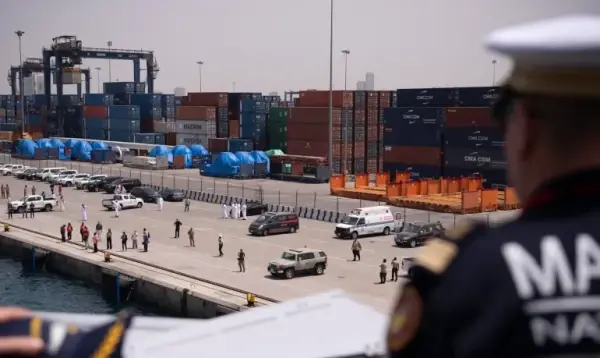
International trade has seen major changes centered on the recent seaborne crisis. As shipping traffic on certain routes is disrupted, shipping companies are being forced to use alternative land routes and new ports.
Due to the complications in transporting goods, especially in the Gulf countries, goods unloaded from container ships are now being delivered to their destinations by truck. As a result, both time and cost have increased compared to before.
In this situation, the port of Jeddah in Saudi Arabia has emerged as an important regional logistics hub. Large shipping companies such as MSC, CMA CGM, Maersk and COSCO are now bringing goods to Jeddah via the Suez Canal.
From there, goods are being delivered to Sharjah, Bahrain and Kuwait by truck using desert roads. Direct sea transport of goods to these areas has been almost stopped for the past two months.
However, due to the sudden increase in the pressure of goods, severe congestion has arisen at the port of Jeddah. Arthur Barillas de Rezende, co-founder of freight forwarding company Oversy, said the port was not prepared to handle such a large volume of imports.
As an alternative, Oman's Sohar port and the United Arab Emirates' Khorfakkan and Fujairah ports are being used to avoid the Strait of Hormuz.
Goods are also being sent to Baghdad and Basra in Iraq via the port of Aqaba in Jordan. At the same time, a new corridor has been opened to deliver goods to northern Iraq via Turkey.
According to analysts, this change could have a long-term impact on the global supply chain and further increase trade costs.
Advertisement
Most Readed - International




- Love, Resentment and ‘Write to the Address of the Sky’: The Untold Story of Rudra and Taslima
- BPC Reports Loss of Nearly Tk 90 Per Liter on Diesel
- 'Without you...', Dev-Shubashree again discussed in Shubhashree's post
- PSG President Under Investigation Over Alleged Conflict of Interest Regarding Broadcasting Rights
- Iran Claims Downing of US MQ-1 Drone over Hormuz
- Prime Minister Tarique Rahman En Route to New York for UN Session
- I’ve prayed a thousand times that men would get periods too: Shruti Haasan
- "The government will have to pay a price for enacting laws contrary to the Quran and Sunnah": Shafiqur Rahman
- NCL 'Second Eleven' Championship to be Held Across Five Venues
- Strait of Hormuz to Remain Closed Until Iran's Conditions Are Met: Ghalibaf
- Joining the Mecca Pact is Bangladesh's own matter: Jamaat Ameer
- 15 artists including Boga Taleb to sing in memory of Razzak Dewan
- Dr. Tasnim Zara: Education, Career and Politics
- Salman Shah, the evergreen hero of Bengali cinema, lost untimely
- AC explosion in Pakistani hospital, 15 newborns die
- Bangladeshi football will not change just by playing with Brazil, says Aminul
- Australian captain impressed by Shariful's bowling
- Time has released a list of 100 influential people in the world of AI
- Rain forecast for five more days across the country
- Door-to-door health check-ups, ‘Health Hub’ to be set up in unions: Health Minister