High Court decision caretaker government and referendum provisions are returning

Published: 11:54 9 July 2026
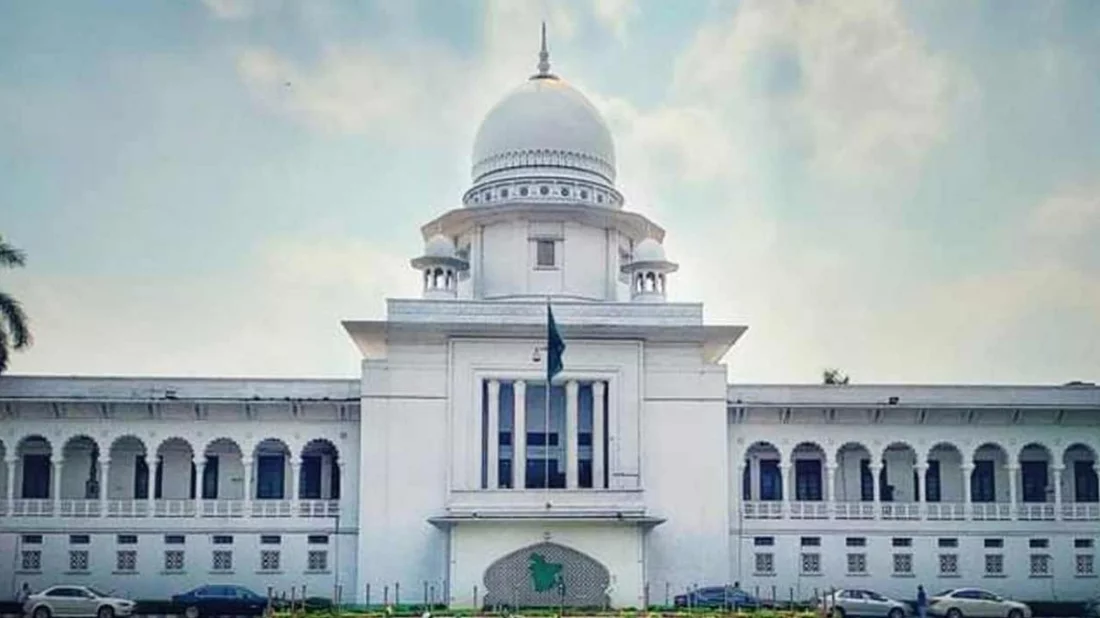
The Appellate Division has upheld the High Court's verdict declaring the decision to abolish the caretaker government and referendum provisions through the 15th Amendment to the Constitution as illegal. The concerned lawyers said that the dismissal of the appeal against the High Court's decision has paved the way for the restoration of the caretaker government system and the constitutional provisions of the referendum.
A four-member appeal bench headed by the Chief Justice announced the verdict at around 9:30 am on Thursday (July 9). The country's highest court dismissed the appeal challenging the High Court's verdict regarding the 15th Amendment.
After announcing the verdict, the lawyers involved in the case referred to the decision as an important event in the country's constitutional and democratic history.
Attorney General Barrister Md. Ruhul Quddus Kajal participated in the hearing for the state in the court. Dr. Sharif Bhuiyan was on behalf of the writ petitioners. Advocate Mohammad Shishir Monir was on behalf of Jamaat-e-Islami.
Verdict after three days of hearing
The hearing of the appeal against the High Court's verdict declaring several provisions of the 15th Amendment, including the abolition of the caretaker government system, as illegal, concluded on Wednesday. After three consecutive days of hearing, the Appellate Division had set July 9 as the date for the announcement of the verdict.
Earlier, the Supreme Court had allowed the appeal against the High Court's verdict on November 13 last year. The Appellate Division headed by Chief Justice Dr. Syed Refat Ahmed gave the order.
Earlier, on November 3, a leave to appeal was filed seeking the complete repeal of the 15th Amendment. The application was filed by lawyer Dr. Sharif Bhuiyan on behalf of Dr. Badiul Alam Majumdar, editor of Sujan for Good Governance.
What the High Court verdict said
On December 17 last year, a High Court bench comprising Justice Farah Mahbub and Justice Debashish Roy Chowdhury declared some important parts of the 15th Amendment unconstitutional and illegal.
However, the court did not strike down the entire 15th Amendment. Separate decisions were given on the abolition of the caretaker government, the removal of the referendum provision, and the validity of some articles added to the constitution.
The main subject of the High Court's observation was the question of democracy and free elections. According to the court, democracy is an integral part of the basic structure of the constitution and a truly democratic system can be effective only through free, fair, impartial and influence-free elections.
The court further observed that the recent national elections held under the party government could not create the necessary confidence among the people about fair elections. This has had a profound impact on the political and social reality of the country.
Provision for abolition of caretaker government repealed
The caretaker government system was abolished through the Fifteenth Amendment. Sections 20 and 21 of the Amendment Act were related to the abolition of this system.
The High Court declared those two sections to be inconsistent with the Constitution. In the court's analysis, the caretaker government system was added to the Constitution based on the political aspirations of the people and electoral realities and at one stage it became an important part of the democratic structure.
The court felt that the process of abolishing this system had damaged the basic structure of the Constitution, especially the democratic system.
Lawyers said that the constitutional basis for the restoration of the caretaker government system has been created as the Appellate Division upheld the High Court's decision.
Referendum provision also found its way back
Another important change in the Fifteenth Amendment was the abolition of the referendum provision in amending the Constitution.
This provision of referendum was part of Article 142 of the Constitution. It was deleted through Article 47 of the Fifteenth Amendment Act.
The High Court's judgment declared that section to be inconsistent with the basic structure of the Constitution. At the same time, it was decided to reinstate the provision of referendum in the previous constitutional structure.
After the judgment of the Appellate Division, the High Court's decision has also paved the way for its effectiveness.
Decision on Articles 7A, 7B and 44(2)
The High Court also struck down Articles 7A and 7B and two clauses of Article 44, which were added to the Constitution through the Fifteenth Amendment.
Article 7A provided for considering acts such as abrogation or suspension of the Constitution as a crime. On the other hand, Article 7B determined that some basic provisions of the Constitution were not eligible for amendment.
Article 44(2) allowed Parliament to give certain powers to other courts through legislation in the implementation of fundamental rights.
The High Court ruled that these provisions were not compatible with the basic structure of the Constitution.
The entire Fifteenth Amendment was not repealed
The court's decision did not repeal all the provisions of the Fifteenth Amendment. The amendments made additions, changes and substitutions in a total of 54 cases.
The High Court's ruling said that the future National Parliament will be able to decide on the provisions that were not directly repealed by following the law and constitutional process. If necessary, there will be an opportunity to amend, modify or change based on public opinion.
These issues include the constitutional recognition of Sheikh Mujibur Rahman and the provisions related to the historic speech of March 26, along with several other issues.
How the legal battle began
On August 19 last year, the High Court issued a rule asking why the provision abolishing the caretaker government system should not be declared illegal.
The High Court bench comprising Justice Naima Haider and Justice Shashank Shekhar Sarkar gave the rule. Sujan Editor Dr. Badiul Alam Majumdar and others filed a writ petition in the preliminary hearing.
Advertisement
Most Readed - National



- Rumors of a Split in Sabila Nur’s Seven-Year Marriage; Allegations of a New Relationship Emerge
- A new innovation in football: ‘Electronic cards’ replace traditional yellow and red cards!
- ‘Khaliduzzaman hasn’t stepped onto the streets for even 16 seconds in 16 years’: Rashed Khan
- How many times has Pori Moni been married, and who were her husbands? Find out the details.
- Smugglers Shift from Roads to Waterways: Yaba Shipments Distributed Nationwide via Trawlers
- A ₹125 Crore Opening: Rajinikanth’s ‘Jailer 2’ Takes the Box Office by Storm
- Cocktail Bomb Explodes Outside NCP Central Office at Midnight; Panic Ensues
- Replica of the World Cup Trophy from Messi’s Celebration to be Auctioned; Features Signatures of 8 Stars
- UAE Royal Found Unconscious on London Street; 3-Year-Old Child Left Vulnerable Nearby
- State Minister Spends Night at Secretariat to Prevent Question Paper Leaks; 300,000 Candidates to Take Exam Today
- Fuel for Rooppur Nuclear Power Plant Arriving in Bangladesh Today
- Cybercriminals Claim to Possess Data of 19 Million Pathao Users; $400,000 Ransom Demanded
- Jamuna Fertilizer Factory Shuts Down Again Just Two Days After Resuming Operations
- Ronaldo faces risk of 6-month ban for leaving national team camp
- Messi bids farewell with a goal and assists, showered with love by teammates
- Ronaldo shares emotional message upon Messi's retirement, expressing 'utmost respect'
- Countless Decembers will come and go, but Sheikh Hasina will not return to the country: Rashed Khan
- Hasnat Questions the Source of Salahuddin’s Wealth, Demands Transparent Accounting
- Three-Day Mosquito Eradication Drive Begins in Savar's Bongaon
- Hashmatullah leaves the field after injury while batting against Bangladesh