Sheikh Hasina Plans December Return to Bangladesh, Intends to Surrender in Court

Published: 12:52 11 July 2026
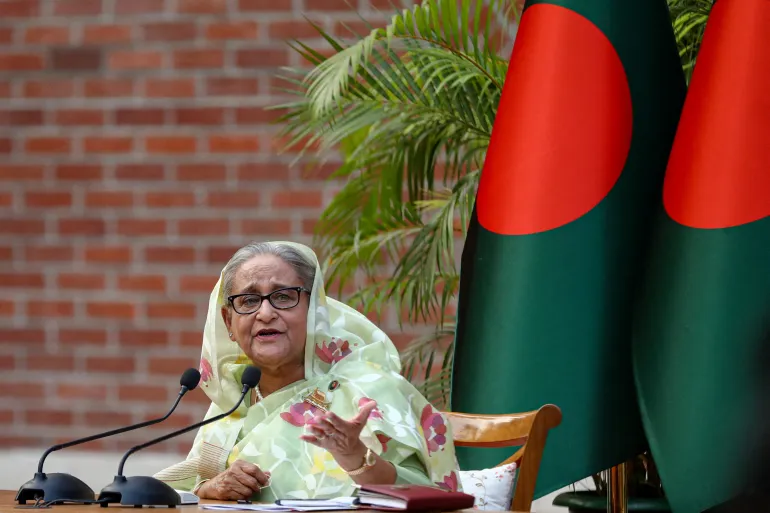
Former Bangladeshi Prime Minister Sheikh Hasina has announced plans to return to the country from India in December. She said she intends to appear before a court alongside several senior Awami League leaders and challenge the legal measures taken against the party.
According to reports by Al Jazeera and Reuters, Hasina revealed the possible timing of her return during a telephone interview from New Delhi. However, she did not specify the exact date of her arrival or the court in which she would appear.
Hasina left Bangladesh for India after the student-led mass uprising in 2024 brought an end to her government. She was later sentenced to death in absentia by Bangladesh’s International Crimes Tribunal over allegations related to the use of deadly force during the suppression of the protests. She has rejected the charges and described the proceedings as politically motivated.
During the interview, Hasina acknowledged that she could be arrested upon her return and that her personal safety might be at risk. Despite this, she said she wanted to return to her own country and face the legal process.
She also called on other senior Awami League figures living abroad to return with her. Among them is former Home Minister Asaduzzaman Khan Kamal, who also reportedly faces a death sentence. According to Hasina, the group plans to surrender before the court together.
The former prime minister said she also wants to challenge the suspension of the Awami League’s political activities. She argued that the public should decide through elections whether a political party has failed, rather than having the party removed through legal or administrative action.
Although she acknowledged that her conviction could prevent her from contesting future elections, she questioned why the Awami League itself should be denied the right to participate in politics.
Hasina said she has been trying to reorganise the party from India. She claimed to have held online meetings with leaders and activists from more than 100 parliamentary constituencies. Many party members are reportedly in hiding or facing legal cases and arrest.
Her possible return could create new political tension in Bangladesh. Since the fall of her government in 2024, the country has been going through a period of political and institutional change. Analysts believe her return could become a major test for the justice system, law enforcement agencies and the wider political environment.
Her continued presence in India has also strained relations between Dhaka and New Delhi. Bangladesh has repeatedly requested her extradition, while Indian officials have said they are examining the request and want to engage constructively with the Bangladeshi authorities.
If Hasina returns voluntarily, it could reduce one major source of diplomatic tension between the two neighbouring countries.
Hasina has experienced imprisonment and political exile before. After returning to Bangladesh in 1981, she was detained several times during movements against military rule. She was also imprisoned during the military-backed caretaker government in 2007 before being released and returning to power following the 2008 election.
Her long tenure in government was associated with economic growth, major infrastructure projects and the expansion of Bangladesh’s garment industry. At the same time, her administration faced serious criticism over authoritarianism, suppression of dissent and alleged electoral irregularities.
Hasina said her plan to return was not the result of any secret understanding with a foreign government. She maintained that issues involving democracy, voting rights, justice and the political future of the Awami League should be addressed openly.
Neither the Bangladeshi nor the Indian government has yet made a formal announcement regarding her planned return.
Source: Al Jazeera and Reuters.
Advertisement
Most Readed - National



- Love, Resentment and ‘Write to the Address of the Sky’: The Untold Story of Rudra and Taslima
- BPC Reports Loss of Nearly Tk 90 Per Liter on Diesel
- 'Without you...', Dev-Shubashree again discussed in Shubhashree's post
- PSG President Under Investigation Over Alleged Conflict of Interest Regarding Broadcasting Rights
- Iran Claims Downing of US MQ-1 Drone over Hormuz
- Prime Minister Tarique Rahman En Route to New York for UN Session
- I’ve prayed a thousand times that men would get periods too: Shruti Haasan
- "The government will have to pay a price for enacting laws contrary to the Quran and Sunnah": Shafiqur Rahman
- NCL 'Second Eleven' Championship to be Held Across Five Venues
- Strait of Hormuz to Remain Closed Until Iran's Conditions Are Met: Ghalibaf
- Joining the Mecca Pact is Bangladesh's own matter: Jamaat Ameer
- 15 artists including Boga Taleb to sing in memory of Razzak Dewan
- Dr. Tasnim Zara: Education, Career and Politics
- Salman Shah, the evergreen hero of Bengali cinema, lost untimely
- AC explosion in Pakistani hospital, 15 newborns die
- Bangladeshi football will not change just by playing with Brazil, says Aminul
- Door-to-door health check-ups, ‘Health Hub’ to be set up in unions: Health Minister
- Rain forecast for five more days across the country
- Time has released a list of 100 influential people in the world of AI
- Police deny permission for Awami League-affiliated seminar in Delhi