High Court's important verdict on sister's inheritance claim in brother's property

Published: 04:43 15 August 2026
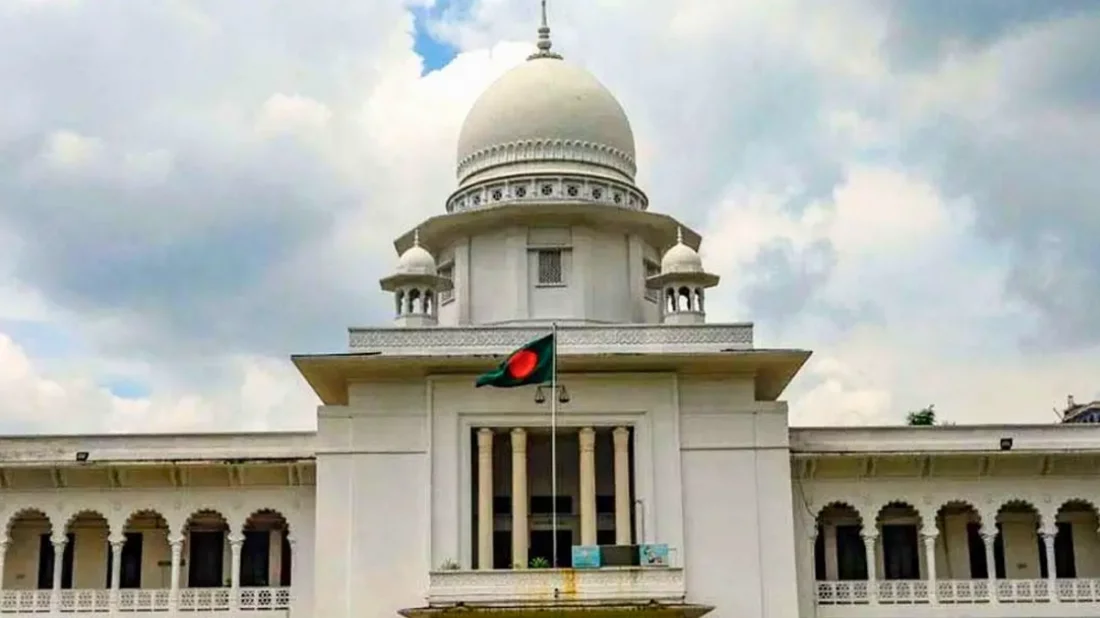
According to the Hindu Succession Act, the High Court has ruled that a sister cannot claim her right as an heir or 'reverser' in her brother's property. The High Court has upheld the previous decision of the lower court by dismissing a civil revision petition in this regard.
On July 9, a High Court bench comprising Justice Sheikh Abdul Awal and Justice Md. Rafizul Islam announced the verdict. The full copy of the verdict was published on Thursday (August 14).
High Court's explanation on sister's inheritance claim in Hindu Succession Act
The High Court gave this verdict in the context of the case 'Lili Rani Das and Others, Heirs of Amar Kumar Das vs. Dr. Manoranjan Mahuri and Others'. The main part of the verdict was written by the junior justice of the bench Md. Rafizul Islam.
Advocate Sameeran Das Gupta heard the hearing in favor of the revision petition in the court. The defendant was lawyer Taufiq Anwar Chowdhury.
Court's observation on the rights of widows
In its observation of the verdict, the High Court gave an important explanation on the rights and inheritance of widows under the Hindu Dhaibaha Act.
The court said that a widow cannot claim her brother's property as a sister heir or 'reverser' while she is alive. After the death of her husband, the widow acquires legal rights to that property.
However, although the widow's power to transfer property is legally limited, not everyone has the right to object to the transfer of any property.
Who can challenge the transfer of property
According to the High Court's observation, only the person who has the legal qualification to be the next real heir or 'reverser' of that property after the widow's death can question the validity of the transfer of property made by the widow.
On the other hand, if a person does not have a present or future legal interest in the property, then he does not have the jurisdiction to file a case in court claiming that the property was ‘transferred without legal necessity’.
The long-standing legal dispute over the land
According to the case records, Ramkant Biswas of Patiya Upazila of Chittagong bought 1.35 acres of land in the name of his son Satish Chandra Biswas in 1920 with his own money.
While Ramakant Biswas was alive, his son Satish Chandra Biswas died. Later, in 1933, Ramakant Biswas also died.
Then, Satish Chandra Biswas’s wife Savitri Bala sold the land to Dr. Manoranjan Mahuri in 1996.
Case in court in 1998
Saul Bala Das, daughter of Ramakant Biswas, filed a case in the Patiya court in 1998, claiming that the land sale deed prepared by Savitri Bala was fake and fraudulent.
In the case, he claimed inheritance rights to the property.
However, after reviewing the evidence and related legal issues, the Patiya Subordinate Judge Court dismissed Saul Bala's case on June 22, 2000.
The verdict of the subordinate court was also upheld
Later, Saul Bala appealed against that verdict to the First Additional District Judge Court of Chittagong. But that appeal was also dismissed on September 23, 2007.
Then, aggrieved by the verdict of the subordinate court, a civil revision petition was filed in the High Court in 2008. That same year, the High Court issued a rule in this regard.
After a long legal process, the High Court dismissed that rule on July 9. At the same time, it upheld the previous verdicts and decrees given by the Patiya Subordinate Judge Court and the First Additional District Judge Court of Chittagong.
The main point of the High Court's verdict
According to the Hindu Succession Act, a sister cannot claim as a 'reversioner' in the brother's property in all cases.
If the brother's widow is alive, then there is no opportunity for the sister to claim inheritance in her property.
After the widow's death, only the person who is the actual reversioner in law can challenge the transfer of property in certain circumstances.
A person who has no present or future legal interest in the property cannot file a case on the grounds of 'there was no legal necessity' alone.
The High Court has upheld the decision of the lower court in a long-standing case.
Advertisement
Most Readed - Crime & Order



- Why is there so much mental pressure in one’s late twenties regarding career, marriage, and children?
- Cyberattack on Janata Bank Website
- Two Warranted Accused Arrested in Khoksa Police Raids, Including Zakir Hasan Masud
- Mahmuda Mitu Appointed as New Convener of NCP’s National Women’s Wing
- Neymar threatens opponent after receiving a red card
- Tom Cruise’s ‘Digger’ Flops at the Box Office; Fears of Significant Losses
- Hundreds of Thousands Protest Rising Cost of Living in France; Nearly 1,000 Arrested
- Prime Minister to Visit Japan Tonight
- Shooting at Asif Akbar’s Car Is an Ominous Sign: Omar Sani
- Wife’s 5 Ribs Break During Husband’s Embrace; Underlying Health Risks Revealed
- Fuel for Rooppur Nuclear Power Plant Arriving in Bangladesh Today
- Cybercriminals Claim to Possess Data of 19 Million Pathao Users; $400,000 Ransom Demanded
- Jamuna Fertilizer Factory Shuts Down Again Just Two Days After Resuming Operations
- Ronaldo faces risk of 6-month ban for leaving national team camp
- Hasnat Questions the Source of Salahuddin’s Wealth, Demands Transparent Accounting
- Messi bids farewell with a goal and assists, showered with love by teammates
- Countless Decembers will come and go, but Sheikh Hasina will not return to the country: Rashed Khan
- Ronaldo shares emotional message upon Messi's retirement, expressing 'utmost respect'
- Houthis Claim Third Attack on Riyadh Airport; Aircraft Damaged
- Three-Day Mosquito Eradication Drive Begins in Savar's Bongaon