NBR to be split into two independent institutions: Finance Minister

Published: 03:31 18 August 2026
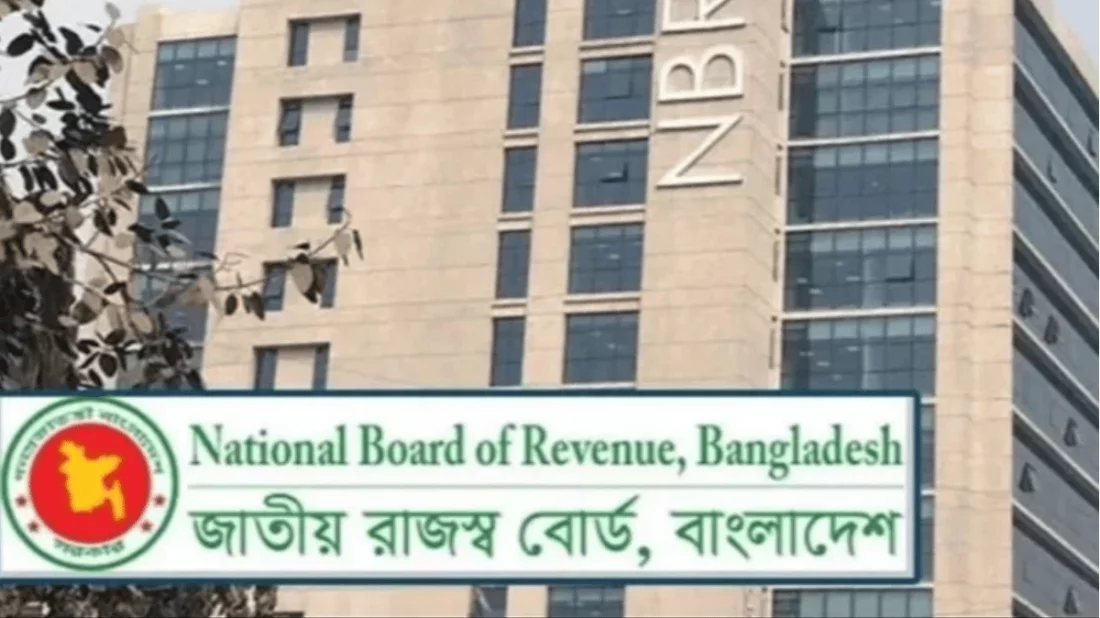
A final decision has been taken to restructure the National Board of Revenue (NBR) and make it into two independent institutions, said Finance and Planning Minister Amir Khasru Mahmud Chowdhury. In the new structure, one institution will work as the Revenue Policy Department and the other as the Revenue Management Department.
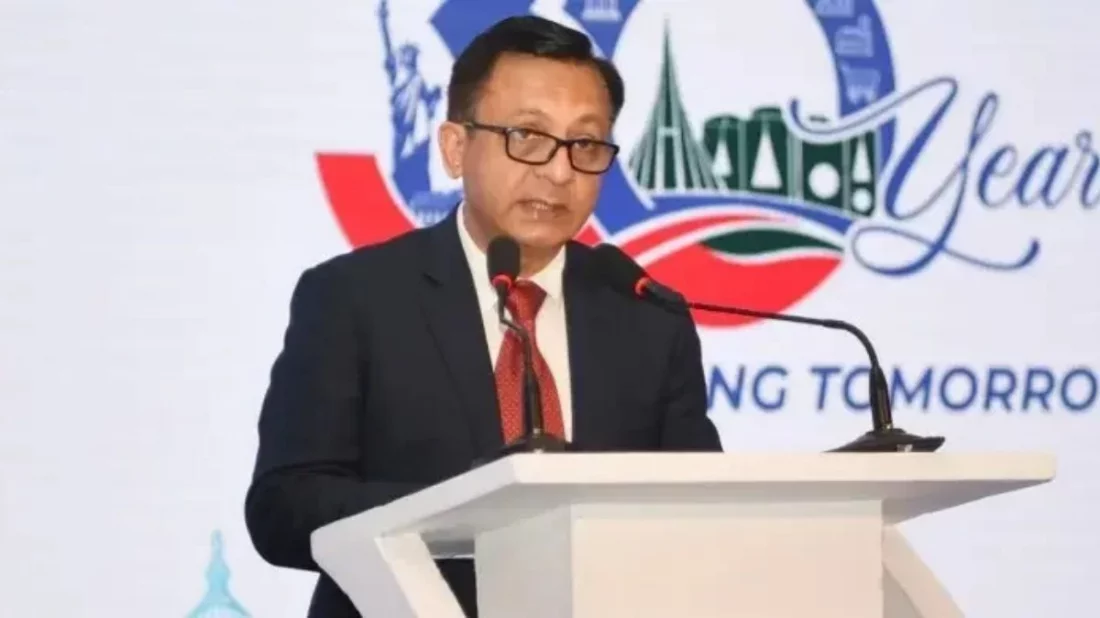
The Finance Minister gave this information while delivering a speech at the 'Revenue Conference-2026' organized at the Bangladesh-China Friendship Conference Center in the capital on Tuesday (August 18).
Revenue Policy Department to be a 'Think Tank'
The Finance Minister said that the new Revenue Policy Department will work as the government's policy-making 'Think Tank'. This institution will formulate tax policies with the opinions of economists, researchers, private sector representatives and experts from industry and trade organizations.
Its aim will be to create a balanced, competitive and economic growth-friendly tax structure.
On the other hand, he referred to the Revenue Management Department as the government's 'Action Team'. The main responsibility of this department will be to ensure effective and efficient revenue collection.
Plan to simplify the tax system
Amir Khasru Mahmud Chowdhury said that one of the main goals of the government is to simplify the tax payment process for taxpayers and implement the law properly.
Emphasis will be placed on expanding the tax coverage without putting additional pressure on existing taxpayers. In addition, there are plans to reduce unreasonable tax exemptions, stop tax evasion and tax avoidance, and increase the use of technology to encourage taxpayers to pay taxes regularly.
Revenue collection target of 6 lakh 4 thousand crore taka
The Finance Minister said that the revenue collection target for the 2026-27 fiscal year has been set at 6 lakh 4 thousand crore taka. This target is 46 percent higher than the previous fiscal year.
He said that although the target is ambitious, it has been set in a planned manner. It is also necessary to increase the state's revenue collection capacity in line with the increase in the size of the economy.
Aiming for an investment-based economy by reducing debt dependence
Under the leadership of Prime Minister Tarique Rahman, the government wants to move from a debt-based economy to an investment-based economy, said Amir Khasru.
He said that the use of own resources must be increased to finance the country's development activities. For this, it is necessary to build a strong and modern revenue system.
'Contact-free' revenue administration
The Finance Minister said that technology and automation are being given utmost importance in modernizing the revenue system.
He said that taxpayers will not need to go directly to officials unless there is a special need. The government's goal is to create a completely 'contact-free' and 'faceless' revenue administration.
In the meantime, various technology-based initiatives have been taken, including e-tax management, Asicuda World, National Single Window and modern scanning system.
Bangladesh's tax-GDP ratio is low
The Finance Minister mentioned the low tax-GDP ratio as one of the biggest problems in Bangladesh's revenue system.
He said that in the 2024-25 fiscal year, Bangladesh's tax-GDP ratio has decreased from 6.8 percent to 6.7 percent. This rate is one of the lowest in the world.
According to the information provided by the Finance Minister, the average tax-GDP ratio in the Asia-Pacific region in 2023 was 19.5 percent. At the same time, Bangladesh's ratio was 7.2 percent.
Revenue Conference a platform for building national consensus
Amir Khasru said that the Revenue Conference is not just an event to discuss tax collection or revenue targets. It is an important platform for building national consensus.
He also commented that this conference will play an important role in determining the structure of the future revenue system to build a developed and prosperous Bangladesh with its own finances.
Advertisement
Most Readed - Finance & Trade



- Barça's Rampage in Women's El Clásico: Real Crushed 7-0
- Koel Mallick Joins BJP and Becomes Rajya Sabha Candidate
- End of a 10-Year Relationship: Pritom and Shehtaz Part Ways
- Prime Minister pledges to ensure quality housing for low-income people
- "Five Monumental stadiums would have been packed" for Messi's farewell match: Scaloni
- Angelina Jolie Shares Images of Devastation in Gaza, Calls for Urgent Aid
- North Korea Tests AI-Equipped Missile Capable of Mid-Flight Course Correction
- Bangladesh to Join World's Top 30 Economies by 2030: EU Ambassador
- Commerce Minister seeks explanation from traders on why Malta oranges cost Tk 520 per kg
- 'Drishyam 3' Sets Box Office Record with ₹95 Crore on Day One
- No Relief in Fish, Chicken and Egg Prices, Low-Income People Under Pressure
- Price of Low-Tier Cigarettes Raised Again; 10 Sticks Now Cost Tk 65
- BUP wins first runner-up in singing, Southeast Cultural Fest 3.0
- Love, Resentment and ‘Write to the Address of the Sky’: The Untold Story of Rudra and Taslima
- Squad Trimmed: Six Players Dropped from Bangladesh's ASEAN Cup Team
- RAB Dissolved, SRB Begins Operations; Uniforms, Logos, and Vehicle Colors to Change
- Russia proposes inclusion of Iran in Mecca defense pact
- Bangladesh Bank to provide up to Tk 20 lakh without collateral; here is which young entrepreneurs are eligible.
- "Jinnah's father sold fish; he was a Hindu": Fazlur Rahman's claim vs. historical records
- Raphinha Equals Messi's Record; Barcelona Makes History in 7-Goal Thriller