The Story of Actress Shabana’s Struggles, Success and Departure from the Silver Screen
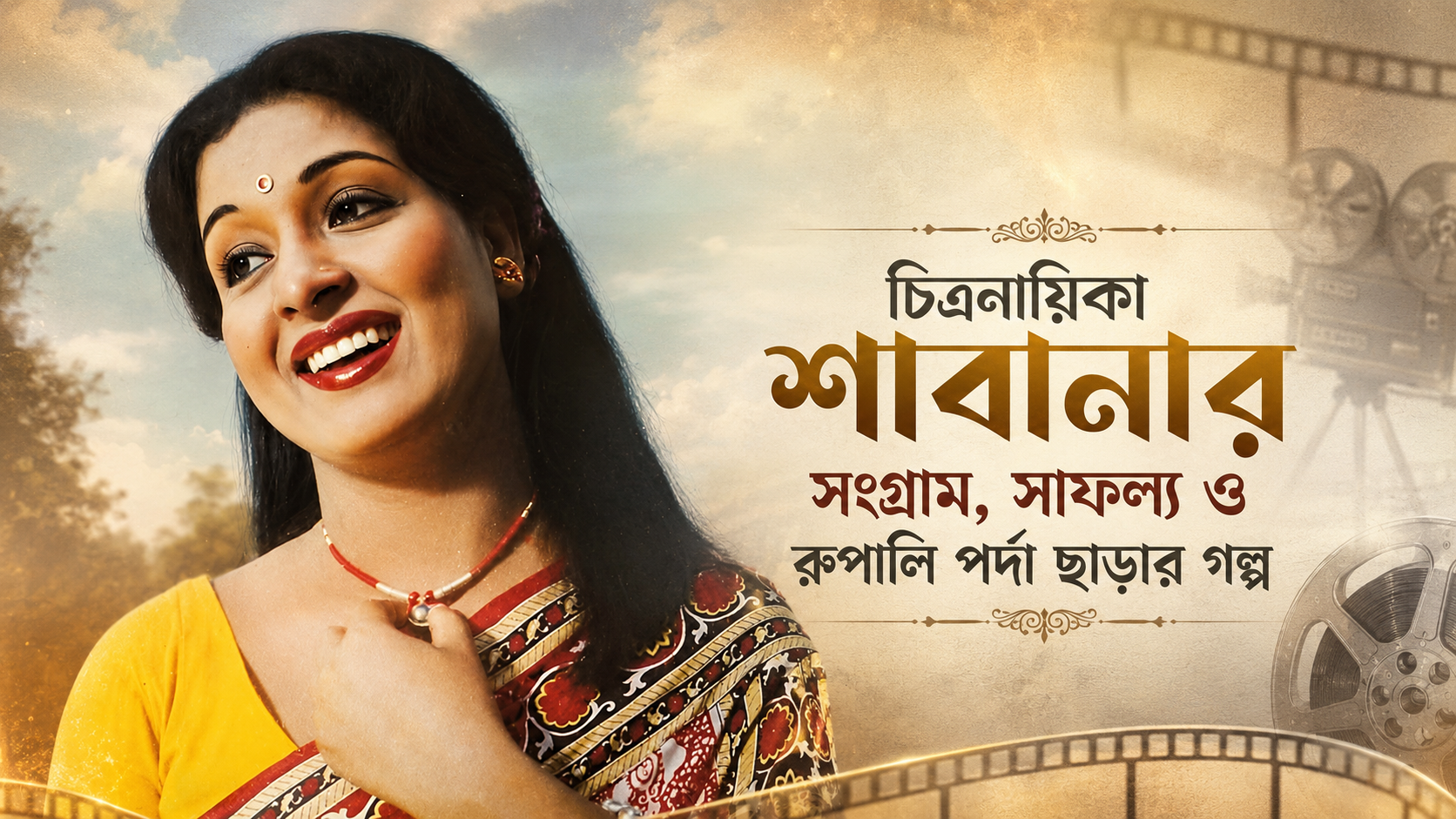

Published: 01:08 3 September 2026
Who Is Shabana?
Shabana, popularly known simply as Shabana, is one of the most celebrated and influential actresses in the history of Bangladeshi cinema. With a career spanning nearly three decades, she became one of the defining female stars of the country's film industry.
Known for her powerful performances, graceful screen presence and versatility, Shabana appeared in hundreds of films and worked with many of the most prominent actors, directors and producers of her era. She was particularly admired for portraying emotional, family-oriented and socially significant characters.
Her popularity extended beyond Bangladesh, as she also worked in Pakistani Urdu films and appeared in a Hindi-language film during her career.
Shabana's Real Name and Early Life
Shabana's birth name is Afroza Sultana Ratna. She was born on June 15, 1952, and grew up in Dhaka.
Her family had roots in Raozan, Chattogram. From an early age, she became interested in the performing arts, eventually entering the film industry as a child artist.
Unlike many stars who entered cinema after becoming adults, Shabana began her career at a very young age. Her early experience in front of the camera helped her develop the confidence and skills that would later make her one of the most successful actresses in Bangladeshi cinema.
Shabana's Entry Into the Film Industry
Shabana entered the film industry as a child actress in the early 1960s. One of her early appearances was in the film Notun Sur.
At that time, the film industry of the region was going through major changes, and young performers had opportunities to establish themselves through supporting and child roles.
Shabana gradually gained experience and recognition. Her natural acting ability and screen presence eventually opened the door for her to take on leading roles.
Breakthrough With Chakori
A major turning point in Shabana's career came with the film Chakori, released in 1967.
She appeared opposite Pakistani actor Nadeem, and the film helped establish her as a leading actress.
The success of Chakori marked the beginning of a remarkable journey. From that point onward, Shabana became increasingly popular with audiences in both East Pakistan and, later, Bangladesh.
Her performances demonstrated that she was capable of handling not only romantic roles but also emotionally demanding characters.
Rise to Stardom in the 1960s and 1970s
During the late 1960s and 1970s, Shabana quickly became one of the leading actresses of the Bengali film industry.
She worked with many famous actors and directors and appeared in films across different genres. Her popularity grew because of her ability to connect emotionally with ordinary audiences.
Her performances often focused on themes such as:
- Family relationships
- Love and sacrifice
- Social inequality
- Women's struggles
- Motherhood
- Poverty
- Moral conflict
- Human relationships
This combination of glamour, emotional depth and acting ability made Shabana different from many other actresses of her generation.
Shabana During the Golden Era of Bangladeshi Cinema
The 1970s and 1980s are widely remembered as important periods in the development of Bangladeshi cinema.
Shabana became one of the central figures of this era.
She appeared in numerous commercially successful and critically appreciated films. Her ability to portray both sophisticated urban women and characters from ordinary families made her extremely versatile.
She was particularly successful in films where the female protagonist faced difficult social and family circumstances.
Her popularity also helped strengthen the position of female stars in the Bangladeshi film industry.
Shabana and Alamgir: One of Cinema's Most Popular Pairings
One of Shabana's most famous on-screen partnerships was with actor Alamgir.
The two appeared together in a large number of films and became one of the most successful screen pairs in Bangladeshi cinema.
Their chemistry was popular with audiences, and they worked together in numerous successful productions.
The Shabana-Alamgir pairing became particularly memorable because their performances often combined romance, family drama and emotional storytelling.
Shabana and Nadeem
Shabana also had a highly successful professional partnership with Pakistani actor Nadeem.
Their collaboration became especially notable after Chakori.
At a time when Bengali and Urdu-language films were closely connected within the Pakistani film industry, Shabana successfully established herself as a prominent actress across linguistic and geographical boundaries.
Her work with Nadeem helped introduce her talent to a wider audience.
Shabana's Work in Pakistani Cinema
Before and around the early years of Bangladesh's independence, Shabana also worked in Pakistani Urdu cinema.
Her ability to perform in different linguistic and cultural environments demonstrated her versatility as an actress.
She became a familiar face to audiences beyond the Bengali-speaking region and established herself as a significant South Asian screen performer.
Shabana's Hindi Film Career
Shabana also appeared in a Hindi-language film titled Shatru, released in 1986.
The film featured Indian superstar Rajesh Khanna.
Although her career was primarily centered on Bangladeshi cinema, her appearance in Hindi cinema demonstrated the broader recognition she had achieved during her peak years.
Notable Films of Shabana
Throughout her career, Shabana appeared in a large number of memorable films.
Some of the notable titles associated with her career include:
- Chakori
- Janani
- Sokhi Tumi Kar
- Dui Poisar Alta
- Nazma
- Bhat De
- Apeksha
- Ranga Bhabi
- Moroner Pore
- Achena
- Mati'r Ghor
- Ghore Ghore Juddho
These films represent different stages of her long career and showcase her versatility as a performer.
Bhat De and Shabana's Acting Legacy
One of the films frequently associated with Shabana's reputation as a serious actress is Bhat De.
The film dealt with poverty, hunger and the struggles faced by disadvantaged people.
Shabana's performance demonstrated her ability to move beyond conventional romantic and commercial roles and portray characters dealing with serious social realities.
Her performances in socially relevant films contributed significantly to her reputation as an actress capable of combining commercial success with emotional and social storytelling.
Dui Poisar Alta
Dui Poisar Alta is another important film associated with Shabana's career.
The film became popular with audiences and further established her reputation as a leading actress.
Her performances in films of this nature often focused on the lives, struggles and emotions of ordinary people, allowing audiences to identify strongly with her characters.
Shabana's Acting Style
One of the most distinctive characteristics of Shabana's acting was her ability to communicate emotions naturally.
She did not rely solely on glamorous appearances. Instead, she frequently used facial expressions, body language and dialogue delivery to express complex emotions.
Her strengths included:
- Emotional acting
- Natural dialogue delivery
- Strong screen presence
- Versatility
- Ability to portray family-oriented characters
- Powerful performances in dramatic roles
Her ability to make audiences emotionally connected to her characters became one of the major reasons behind her long-lasting popularity.
Shabana as a Producer
Shabana was not only an actress. She was also involved in film production.
Together with her husband, producer Wahid Sadique, she became associated with film production and contributed to the business side of the industry.
This gave her a broader role in Bangladeshi cinema beyond acting.
Her involvement in production also reflected her understanding of the filmmaking process and the commercial realities of the industry.
Marriage to Wahid Sadique
Shabana married film producer Wahid Sadique in 1973.
Their marriage became an important part of her personal and professional life.
The couple worked together in the film industry and later built their family life outside Bangladesh.
They have three children.
Why Did Shabana Leave the Film Industry?
After achieving enormous success, Shabana eventually decided to leave acting.
She gradually reduced her involvement in films during the 1990s and eventually retired from the industry.
Her decision surprised many fans because she remained one of the most popular actresses of her generation.
Her final phase in cinema marked the end of an era for a star who had spent almost three decades at the center of the Bangladeshi film industry.
Ghore Ghore Juddho is often cited as her final film.
Shabana's Life After Cinema
After leaving the film industry, Shabana moved to the United States with her family.
Unlike many celebrities who continue to remain active in entertainment after retirement, she largely stayed away from the spotlight.
She chose to focus on her family and private life rather than returning to regular acting.
Despite her long absence from cinema, her popularity remained strong among Bangladeshi audiences.
Shabana's Awards and Recognition
Shabana received numerous awards and honors throughout her career.
She became one of the most frequently recognized actresses in the history of Bangladeshi cinema and received the Bangladesh National Film Award multiple times.
Her achievements reflected both her popularity and the recognition of her acting abilities.
She has also received lifetime achievement recognition for her contribution to Bangladeshi cinema.
Her awards are only one part of her legacy; her lasting influence on generations of viewers remains perhaps her greatest achievement.
Why Is Shabana Called a Legend of Bangladeshi Cinema?
There are several reasons Shabana continues to be remembered as a legend.
First, her career lasted for decades.
Second, she successfully worked across different genres and with numerous leading actors.
Third, she was able to portray both commercially appealing characters and socially serious roles.
Most importantly, she developed an emotional connection with audiences that continued long after she left the industry.
For many viewers, Shabana represents an entire era of Bangladeshi cinema.
Shabana's Contribution to Women's Representation in Cinema
Shabana's career also had significance for the representation of women in Bangladeshi films.
Many of her characters were not simply romantic interests. They were women dealing with family responsibilities, poverty, social pressure, sacrifice and personal struggles.
Through these roles, she helped bring female experiences and perspectives to the center of many popular films.
Her career demonstrated that a female performer could become the central attraction of commercially successful films while also carrying emotionally demanding stories.
Shabana's Popularity Among Bangladeshi Audiences
Even decades after leaving cinema, Shabana remains one of the most recognizable names in Bangladeshi entertainment.
Older generations remember her films with nostalgia, while younger audiences continue to discover her work through television reruns, online platforms and discussions about classic Bangladeshi cinema.
Her name is often mentioned alongside the greatest stars of the country's film history.
Shabana's Place in Dhallywood History
Shabana occupies a unique position in the history of Dhallywood, the popular name for Bangladesh's film industry.
She worked during a period when the industry was establishing its own identity after the independence of Bangladesh.
Her career coincided with a period of significant artistic and commercial development in Bengali cinema.
As one of the leading female stars of that period, she helped shape the image and popularity of mainstream Bangladeshi films.
Shabana's Career in Numbers
Shabana's career was remarkable not only for its longevity but also for the enormous number of productions in which she appeared.
Various sources have reported that she acted in around 300 films, making her one of the most prolific actresses in the history of Bangladeshi cinema.
Her extensive filmography included Bengali and Urdu-language productions and collaborations with numerous leading actors.
Why Did Audiences Love Shabana?
Shabana's popularity cannot be explained simply by the number of films she made.
Audiences connected with her because she appeared believable on screen.
Whether playing a loving wife, devoted mother, struggling woman, romantic heroine or socially disadvantaged character, she brought emotional credibility to her performances.
Her combination of beauty, dignity and acting ability made her particularly memorable.
Shabana's Legacy
Shabana's greatest legacy is the impact she left on Bangladeshi cinema.
She became more than a successful actress. She became a cultural icon.
Her films are part of the memories of several generations of Bangladeshi viewers, and her name remains synonymous with the golden era of Bangladeshi mainstream cinema.
Many actresses who came after her were influenced directly or indirectly by the standards established by stars like Shabana.
Shabana's Life Away From the Spotlight
One of the most interesting aspects of Shabana's later life is her decision to remain largely private.
After spending decades in front of cameras and under public attention, she chose a quieter life with her family.
Her limited public appearances have arguably strengthened the nostalgic image surrounding her.
Rather than constantly appearing in the media, she allowed her films and performances to preserve her place in popular memory.
Shabana: A Symbol of an Era
For many Bangladeshis, the name Shabana immediately brings memories of classic Bengali films, emotional family dramas and the golden period of Dhallywood.
Her career represents an important chapter in the country's entertainment history.
From a child artist to one of the industry's biggest stars, Shabana's journey demonstrates how talent, discipline and longevity can create an enduring legacy.
Conclusion
Shabana is one of the greatest actresses in the history of Bangladeshi cinema.
From her early days as a child artist to her breakthrough in Chakori, from becoming one of Dhallywood's biggest stars to earning national recognition, her journey has been extraordinary.
She acted in hundreds of films, worked with leading actors across generations, explored Bengali and Urdu cinema, and became known for both commercial success and emotionally powerful performances.
Although she eventually left the film industry and chose a private family life in the United States, her influence never disappeared.
For millions of Bangladeshi film lovers, Shabana remains a timeless icon and one of the most important female stars ever produced by Bangladeshi cinema.
Advertisement
Most Readed - Biography


- ‘Khaliduzzaman hasn’t stepped onto the streets for even 16 seconds in 16 years’: Rashed Khan
- How many times has Pori Moni been married, and who were her husbands? Find out the details.
- Smugglers Shift from Roads to Waterways: Yaba Shipments Distributed Nationwide via Trawlers
- A ₹125 Crore Opening: Rajinikanth’s ‘Jailer 2’ Takes the Box Office by Storm
- Cocktail Bomb Explodes Outside NCP Central Office at Midnight; Panic Ensues
- Replica of the World Cup Trophy from Messi’s Celebration to be Auctioned; Features Signatures of 8 Stars
- UAE Royal Found Unconscious on London Street; 3-Year-Old Child Left Vulnerable Nearby
- State Minister Spends Night at Secretariat to Prevent Question Paper Leaks; 300,000 Candidates to Take Exam Today
- Mirza Abbas returns home from Malaysia after nearly a month of medical treatment
- 8 Pieces of Luggage, Including Cricketers' Passports and iPhones, Go Missing; Police Investigate
- Fuel for Rooppur Nuclear Power Plant Arriving in Bangladesh Today
- Cybercriminals Claim to Possess Data of 19 Million Pathao Users; $400,000 Ransom Demanded
- Jamuna Fertilizer Factory Shuts Down Again Just Two Days After Resuming Operations
- Ronaldo faces risk of 6-month ban for leaving national team camp
- Messi bids farewell with a goal and assists, showered with love by teammates
- Ronaldo shares emotional message upon Messi's retirement, expressing 'utmost respect'
- Countless Decembers will come and go, but Sheikh Hasina will not return to the country: Rashed Khan
- Hasnat Questions the Source of Salahuddin’s Wealth, Demands Transparent Accounting
- Three-Day Mosquito Eradication Drive Begins in Savar's Bongaon
- Hashmatullah leaves the field after injury while batting against Bangladesh