Tariq Rahman: Father's ideal, mother's struggle and own political journey
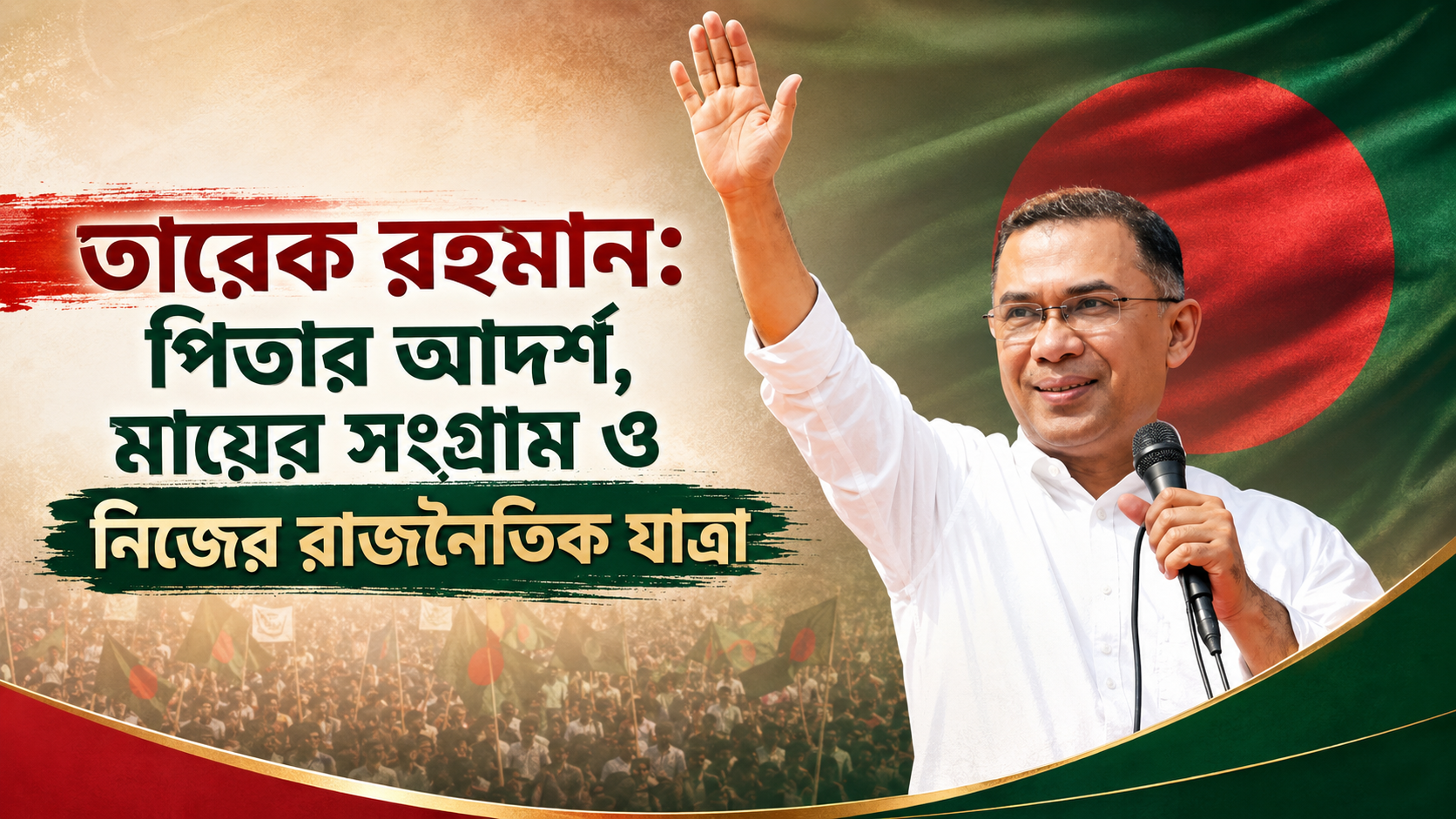
Tariq Rahman: Father's ideal, mother's struggle and own political journey

Published: 06:00 2 July 2026
Tarique Rahman is an important political figure in Bangladesh and the Chairman of the Bangladesh Nationalist Party, BNP. He is the eldest son of Shaheed President Ziaur Rahman Bir Uttam and former Prime Minister Begum Khaleda Zia. Because he was born into a political family, he grew up from an early age in an environment connected with politics, state thinking, and people’s rights. After long years of exile, legal cases, political pressure, and family hardship, he returned to an important position in Bangladeshi politics.
Birth and Family Background
Tarique Rahman was born on 20 November. He is a member of the Zia family, one of the most discussed political families in Bangladesh. His father, Shaheed President Ziaur Rahman, was a freedom fighter, former army chief, and President of Bangladesh. His mother, Begum Khaleda Zia, was a former three-time Prime Minister of Bangladesh and long-time Chairperson of BNP. Growing up in such a family, politics became connected with his life from a very young age.
Childhood and Growing Up
Tarique Rahman’s childhood was not as calm and simple as that of an ordinary child. During the Liberation War of 1971, he was very young. Along with his family, he faced the difficult reality of wartime. Later, in 1981, his father Ziaur Rahman was killed, which became a major shock in his life. From an early age, he began to understand the harsh realities of power, the state, sacrifice, and political struggle.
Educational Life
Tarique Rahman studied at BAF Shaheen College in Dhaka. Later, he was admitted to the Department of International Relations at the University of Dhaka. During his university life, he became interested in state policy, international politics, democracy, society, and people’s rights. This educational background helped build the foundation of his political thinking and leadership.
His Father’s Ideals and Political Learning
A major source of Tarique Rahman’s political ideals is his father, Shaheed President Ziaur Rahman. Ziaur Rahman’s nationalist thinking, focus on independence and sovereignty, multi-party democracy, and the development of ordinary people deeply influenced Tarique Rahman’s political position. In the eyes of his supporters, he has tried to present his father’s ideals to the new generation.
Entry into Politics
Tarique Rahman gradually became involved in BNP’s organizational politics. He increased communication with grassroots leaders and activists and emphasized strengthening the party from the grassroots level. Later, he served as Senior Joint Secretary General, Senior Vice Chairman, and Acting Chairman of BNP. For a long time, he has played an important role in party decisions, organizational planning, and political strategy.
Why He Had to Leave the Country
In 2007, during the army-backed caretaker government, Tarique Rahman was arrested. BNP claims that he was physically tortured at that time and became ill. Later, after being released on bail in 2008, he went to London for advanced medical treatment. Although his critics describe the matter as legal cases and fugitive status, BNP and his supporters see it as a difficult reality of treatment, security, and protection from political revenge.
Life in London and Political Role
Even while staying in London, Tarique Rahman did not move away from politics. From abroad, he continued to provide organizational direction, political strategy, and communication with BNP leaders and activists. After Begum Khaleda Zia was imprisoned, he took responsibility as the Acting Chairman of the party. Leading the party from a distance, maintaining unity among leaders and activists, and giving messages about restoring democracy became major parts of his life in London.
Thoughts for the People of Bangladesh
In his speeches, Tarique Rahman has repeatedly spoken about building Bangladesh as a democratic, safe, inclusive, and economically strong state. His political speeches emphasize people’s voting rights, citizen security, participation of all people regardless of religion or identity, and peace. To his supporters, he is a leader who has thought about the future of the country’s people even while staying far away.
Role During the Awami League Period
During the long period of Awami League rule, Tarique Rahman remained in a central position in opposition politics as one of BNP’s main leaders. As a party leader, he took a position in favor of voting rights, democracy, human rights, and political freedom. During this time, there were several cases and verdicts against him, which BNP claimed were politically motivated. Later, media reports also stated that he was acquitted in some important cases.
His Mother’s Death and Return to the Country
After staying abroad for more than 17 years, Tarique Rahman returned to Bangladesh. His return created emotion and political excitement among his supporters. Some days later, the death of his mother, Begum Khaleda Zia, brought another deep personal grief into his life. His mother’s death, his return after long exile, and his acceptance of party leadership made this chapter of his political life very important.
Current Political Identity
At present, Tarique Rahman is known as the Chairman of BNP. He carries the political legacy of the Zia family and plays an important role in BNP leadership. To his supporters, he represents long struggle, patience, political endurance, and return. His current goals are often presented as democracy, voting rights, national unity, and the rights of the people.
Summary
Tarique Rahman’s life is a long story of politics, family, struggle, exile, and return. From childhood, he has been connected with the political history of Bangladesh. His father’s ideals, his mother’s leadership, his own political experience, and his long life in London have given him a distinct identity in Bangladeshi politics. In the eyes of his supporters, he is a courageous leader who has passed through difficult times and returned to the country’s politics.
Conclusion
Tarique Rahman’s political journey is a widely discussed chapter in Bangladeshi politics. His life includes his father’s ideals, his mother’s struggle, his own exile, legal cases, political pressure, and an emotional return to the country. To his supporters, he is not only a political leader but also a symbol of return—someone who wants to speak of new hope for the voting rights, democracy, and future of the people of Bangladesh.
Advertisement
Most Readed - Biography

- I’ve prayed a thousand times that men would get periods too: Shruti Haasan
- "The government will have to pay a price for enacting laws contrary to the Quran and Sunnah": Shafiqur Rahman
- NCL 'Second Eleven' Championship to be Held Across Five Venues
- Strait of Hormuz to Remain Closed Until Iran's Conditions Are Met: Ghalibaf
- Four Arrested in Opratim Murder Case; Home Minister Confirms Confession
- Baby Girl Born with 28 Digits in Phulbari
- Alia and Ranbir’s initiative to renovate 20 Mumbai schools on Modi’s birthday
- Rashed Khan terms Jamaat's long march 'illogical' but pledges cooperation
- Explosions in Saudi Capital Riyadh; Air Raid Alert Issued
- Real Madrid and Barcelona Eyeing Kavan Sullivan of Bangladeshi Descent
- 15 artists including Boga Taleb to sing in memory of Razzak Dewan
- Joining the Mecca Pact is Bangladesh's own matter: Jamaat Ameer
- Dr. Tasnim Zara: Education, Career and Politics
- Salman Shah, the evergreen hero of Bengali cinema, lost untimely
- AC explosion in Pakistani hospital, 15 newborns die
- Bangladeshi football will not change just by playing with Brazil, says Aminul
- Rain forecast for five more days across the country
- Australian captain impressed by Shariful's bowling
- Door-to-door health check-ups, ‘Health Hub’ to be set up in unions: Health Minister
- Time has released a list of 100 influential people in the world of AI